Winston is a dog owned by Sarah W. They both recently moved from California. Winston is a very polite handsome five year old male Jack Russell mix breed weighing about 11 pounds. His main problem was he had occasional pain from time to time in some non specific area without any apparent cause.
Since he was adopted just a few years ago, Sarah didn’t really know just how long this pain has been a problem. Winston knew but he wasn’t saying. Recently, Winston's pain got so bad, he wouldn't let a groomer touch his body.
When an owner describes sudden “yelping”, with no apparent trauma or cause, I start thinking of cervical disc disease. Of course it could have been many other diseases, but after a routine and neurologic (nervous system) examination, I decided to take radiographs of the cervical vertebrae (the neck). The exam revealed that Winston’s head and neck appeared to be tense and stiff, and he tried to avoid lifting his head when I push the head up toward the ceiling. The radiographs confirmed the tentative diagnosis of cervical disc disease.
| ||||||
Cervical (neck) lesions account for
approximately one fifth of all intervertebral disc problems. Most patients experience neck pain as the first and most consistent clinical sign. "Yelping" or screaming often accompanies this pain. This occurs when there is a moderate disc rupture. The head and neck are held in a tense position with the patient reluctant to elevate the head and neck.
Intervertebral disc disease is the most common neurologic syndrome seen in dogs. Disc degeneration has been reported in 84 breeds with particular susceptibility in certain small breeds. These breeds (Dachshund, Pekinese, Poodle, Beagle, etc.) have characteristic skeletal changes that predispose the discs to degenerate at a very early age.
Intervertebral discs act as cushions between the vertebrae and function as the shock absorbers of the spine. A normal disc has two regions: a resilient gelatinous nucleus (center) and an outer fibrous ring that encircles the nucleus (see Fig.1). A degenerative disc loses its resiliency when its jelly-like center calcifies and develops a gritty, hardened consistency. No longer able to cushion the vertebrae, the center is predisposed to bulging and to rupture (see Fig. 1), resulting in pressure on the spinal cord, pain, and sometimes paralysis.
Diagnosis A diagnosis of intervertebral disc disease is made based on the history and neurologic examination. Radiographs (x-rays) can reveal the presence of degenerative, calcified discs and may outline narrowed disc spaces with evidence of rupture and calcified disc material in the spinal cord. A definitive diagnosis may require a myelogram (a contrast dye study of the spine) to confirm and document not only the location of the ruptured disc but also the amount of spinal cord swelling. The myelogram is a common and safe diagnostic procedure when performed with care and under proper conditions.
Because cervical discs by nature rupture slowly, the symptoms may come and go for some time. Early or mild cases are often treated medically. These medical treatments, which often include corticosteroids to relieve the cord swelling and pain caused by intense inflammation, become unrewarding as more disc material pushes against the spinal cord.
The treatment of choice to reverse the symptoms and return the patient to a normal pain free life is surgical removal of the ruptured portion of the disc from its compressive position under the spinal cord.
Treatment
After radiographs and possibly a myelogram confirm the involved
intervertebral site, a surgical decompression technique (a ventral cervical slotting procedure) is performed from an incision under the neck to remove all of the ruptured disc material. The architecture of the disc space is maintained to allow for a normal recovery. This is exactly what we performed on Winston.
removal of the degenerative center of the
other discs in the neck. This procedure includes up to five intervertebral discs and involves cutting a window in the outer fibrous rim of the discs followed by extraction of the calcified, degenerative centers. This prevents recurrence of any disc rupture, while allowing normal motion and pain free movement following surgery. As the resected center of the disc scars, there is little or no effect on mobility. Winston was operated on for cervical disc disease using the ventral cervical slotting procedure. The following day he allowed our groomer, Donna to handle him. He was groomed without any pain or objection. That made Sarah very happy and Winston had an uneventful, painless recovery. The Providence Veterinary Hospital Blog is a publication of Peter Herman, VMD, at the Providence Veterinary Hospital, 2400 Providence Ave. in Chester, PA. Contact Dr. Herman at 610-872-4000 or visit us at http://www.providencevet.com |
Friday, June 8, 2012
Canine Cervical Disc Disease


Saturday, May 5, 2012
Canine Hero
Never say you can’t teach an old dog new tricks. This old dog, namely, Sebastian, a 12 year
old Collie mixed breed, recently saved three lives and became a hero!
 |
| Sebastian |
To keep the name of the owner private, we will just call him
Mr. P from Somewhere, Pennsylvania. His dog’s name is really Sebastian. This is
the story of Sebastian, Mr. & Mrs. P and how Sebastian saved their lives.
Mr. & Mrs. P were settling down for a peaceful night’s
sleep and so was Sebastian. He usually slept at the foot of the bed. This particular night, however,
Sebastian started to pace first to Mr. P’s side of the bed, then to Mrs. P‘s
side. He wouldn’t stop. Finally Mr P got
up, thinking that Sebastian needed to go out.
After bringing Sebastian back in the house, every one
settled down for the rest of the night.
It wasn’t two minutes and Sebastian started to pace again.
First, he paced to Mr. P. and then to Mrs. P. After waiting about five or ten
minutes, Sebastian still didn’t settle down. Mr. P got out of bed and checked
the upstairs, then the main floor. Nothing abnormal.
Then Mr. P decided to check the basement. It’s the only
place he didn’t check.
When he and Sebastian got down stairs, there was a faint
odor of gas.
Mr. P called PECO and reported his findings. PECO came out
in about ½ hour.
The PECO technician checked for leaking gas and sure enough
found the problem. It was a leaking gas line leading to the hot water heater.
He told Mr. P to treat this dog to anything he wants including a steak. He just
saved your life, your wife’s life and your house. The gas leak could have
ignited the entire house before morning.
 How did I find out about it? Mr. P. was in to Providence Veterinary Hospital with Sebastian
the other day, treating him to anything he wanted and told us the story. A TRUE
STORY OF CANINE HEROISM!
How did I find out about it? Mr. P. was in to Providence Veterinary Hospital with Sebastian
the other day, treating him to anything he wanted and told us the story. A TRUE
STORY OF CANINE HEROISM!The Providence Veterinary Hospital Blog is a publication of Peter Herman, VMD, at the Providence Veterinary Hospital, 2400 Providence Ave. in Chester, PA. Contact Dr. Herman at 610-872-4000 or visit us at http://www.providencevet.com
Saturday, March 24, 2012
Spring has sprung! Safety Tips.
Spring has returned; not that winter was that bad. In spring, there are some precautions you can take that will make your life and that of your pet much more peaceful and safe.
First, with Easter and Passover coming up, here are some items commonly found around the house during this holiday season that you should keep away from your canine and feline friends:
 The Easter Lily is one
holiday flower that no cat owner should have in their house (or yard if you
have an outdoor kitty). All parts of this plant are considered toxic and even
potentially lethal to cats. One single leaf from this plant can cause kidney
failure in the feline. Lily-of-the-valley can also be cardiotoxic to dogs and
cats.
The Easter Lily is one
holiday flower that no cat owner should have in their house (or yard if you
have an outdoor kitty). All parts of this plant are considered toxic and even
potentially lethal to cats. One single leaf from this plant can cause kidney
failure in the feline. Lily-of-the-valley can also be cardiotoxic to dogs and
cats. We all love giving and
receiving Easter Baskets, but one item that cat lovers should keep out of their
baskets is Easter Grass. Just like string, dental floss, and tinsel, Easter
Grass can get stuck on the barbs of a cat’s tongue- and the cat is forced to
ingest it. This foreign body can become entangled around their intestines and
cause circulation to be cut off in the body. This would require emergency
surgery- so it is wise to keep all Easter Grass and string like objects out of
reach of that curious cat!
We all love giving and
receiving Easter Baskets, but one item that cat lovers should keep out of their
baskets is Easter Grass. Just like string, dental floss, and tinsel, Easter
Grass can get stuck on the barbs of a cat’s tongue- and the cat is forced to
ingest it. This foreign body can become entangled around their intestines and
cause circulation to be cut off in the body. This would require emergency
surgery- so it is wise to keep all Easter Grass and string like objects out of
reach of that curious cat!Although we all love to indulge in a chocolate bunny, Easter eggs or Passover candies this time of year, make sure that it stays away from your canine friends! Chocolate contains theobromine, a xanthine compound which is in the same family as caffeine and theophylline- and is toxic to dogs in large doses. Xanthenes affect the nervous system and cardiovascular system primarily. Symptoms of toxicity include hyper excitability, increased heart rate, restlessness, increased urination, muscle tremors, vomiting, and diarrhea.
Do you have a green thumb? Many home owners use this time of year to begin making their yards bloom with new grass and beautiful flowers. Be aware when using fertilizers and pesticides to keep your pet’s exposure to these products extremely minimal. N-P-K- fertilizers (containing nitrogen, phosphorus, and potassium salts) can cause mild gastro-intestinal upset, and also skin irritation on the paws. Fertilizers containing greater than 1% iron can cause iron toxicity if ingested by a dog. When you are done making your lawn look its best, it is wise to store all fertilizers and pesticides where children and pets cannot get to them.
When planting your spring flower gardens take time to consider which plants may be toxic to your pets. A big list of toxic plants in available at www.aspca.org. Popular mulches such as coco bean mulch are toxic to dogs and cats. This mulch contains the same toxic materials found in chocolate.

There are
over 700 springtime
plants that are poisonous to pets; this is just a few that many
people have planted around their house. Putting up simple fences is one way to
keep your pets from getting to these plants.
Tulip - Ingestion can
result in intense vomiting, depression, diarrhea, hyper-salivation, drooling
and lack of appetite.
Hyacinth - Ingestion can
result in intense vomiting, diarrhea, depression and tremors.
Daffodil - Ingestion can
result in severe gastrointestinal illness, convulsions, seizures, low blood
pressure and tremors.
Peace lily - Ingestion can
result in ulcers in the mouth, vomiting and diarrhea.
Easter cactus - Ingestion can
result in vomiting, diarrhea and depression. Cats can also develop staggering.
Crown of Thorns - Ingestion
results in vomiting and diarrhea.
Azalea - Vomiting,
diarrhea, hyper-salivation, weakness, coma, hypertension, CNS depression, cardiovascular
collapse and death.
Crocus - Excessive
salivation, abdominal pain, diarrhea, vomiting, gastro-intestinal disorders,
lack of appetite, tremors, convulsions, seizures
Rhododendron - Vomiting,
diarrhea, hyper-salivation, weakness, coma, hypertension, CNS depression,
cardiovascular collapse and death.
American Bittersweet - Weakness,
convulsions, gastroenteritis (vomiting, diarrhea.)
Clematis - Vomiting,
diarrhea, oral ulcers, ataxia irritant
Foxglove - Cardiac
arrhythmia, vomiting, diarrhea, weakness, cardiac failure, death.
Lily of the Valley - Ataxia,
vomiting, cardiac arrhythmia, death.
Narcissus - Severe
gastrointestinal disorders, convulsions, shivering, hypertension, dermatitis,
muscular tremors, and cardiac arrhythmia.
Morning Glory - Seeds may cause
hallucination, may cause diarrhea.
Buzzzzzz… what is that sound? It is the return of those unwelcome guests - mosquitoes, fleas, and ticks! Fleas cause extreme skin irritation and can also cause severe allergic reactions in some pets. Tick bites are a concern in dogs due to the fact the Deer Tick, or Black-legged Tick which is prevalent in our area, can transmit Lyme disease to your canine companion. Lastly, mosquitoes can transmit heartworms to your cat or dog, which can be fatal.
Proper prevention of these parasites is made very simple by using the correct products which can be prescribed by your veterinarian. Throw away those flea collars folks! Flea collars only work on a limited area of an animal’s neck region and do not prevent fleas from biting. There are many safer and more effective products available today. Flea collars were popular in the 1980’s. Would you buy a TV or car made in 1985 or a flatscreen TV made in 2012? There are much better products sold by veterinarians today.
Spring is
the season when most dogs pick up intestinal parasites. Tapeworms are
contracted from fleas, when a dog licks the flea bites, and roundworms and
hookworms are easily contracted as well. Whether your dog drinks from a stream
or plays with another contaminated dog in the park, intestinal parasites are
easy to contract. Luckily they are also easy to prevent. By placing your dog on
worm prevention medication when spring starts, you can keep him healthy all
season long. And many worm prevention medications also include Heart Worm prevention,
which is ideal.
It is very important to
read product labels very carefully on all flea and tick medications as the
misuse of such medications, particularly over the counter varieties, (which I
don’t approve of) can lead to acute toxicity in pets. It is important never to
use a dog product on your cat, or vice versa. The ingredient “permethrin” found
in some dog medications, while perfectly safe for dogs can be lethal to cats
even in very small doses.Dogs can also have severe allergic reactions to insect bites this time of year. If you notice your dog becoming acutely swollen in the muzzle, or develops hives, it is best to get him to your nearest veterinary facility as soon as possible. If left untreated, the inflammatory response can cause severe illness and respiratory distress.
Lounging by the lake can be a wonderful Spring time activity. But keep in mind when fishing, it is very important to keep all fishing line, hooks, and bait away from your pet. Hooks can easily get stuck in mouths or paws of your pet, and fishing line is extremely strong, and when swallowed can get caught up in your pets intestines, causing a blockage and surgical emergency.
Please keep your canine companions on leash when enjoying walks in the warm weather. Make sure all leashes and collars fit appropriately for your animal, and are not too worn from usage. Most pet stores even welcome you to bring your pet inside the store for a custom fitting! The streets are very busy with cars as the weather gets sunnier and we don’t want anyone running out into the road to chase those cars! Also, be aware of other animals who may not be friendly towards your pet.
Spring is
the time to check your dog's collar and name tag again. Now that your dog will
be outside more, be sure that his collar is snug enough not to snag on a branch
and come off. Be sure your telephone number on his dog tag is up-to-date. Wipe
your leash with anti-bacterial wipes once a week, to remove any dirt or
contaminates that may cling both to the handle and to the leash itself,
especially where it may cling around your dog's backside.

As we start
to grill outdoors, remember that your pet maybe attracted to the smells from
the grill. Larger dogs have been known to knock over a grill trying to reach
whatever is cooking. Be sure to keep your pets a safe distance from the heat
and flames of a grill or outdoor fire pits.
The
domestic feline is the number one cause of death of songbirds worldwide. This
is amplified in the springtime due to the high numbers of baby animals. Cats
also pose a threat to other wild predators by depleting their food source and
forcing them out of their home territories. If a cat must be let outside it is
best to restrain them in a large run or on a lead. Always monitor your cat when
they are outside on a lead and use safety collars to avoid injury. It is also
important to protect your cat from parasites if they go outside including
fleas, ticks, heartworm, and intestinal worms. Dog Park Safety- Spring and summer are the times when dog parks are full of dogs. Many of these dogs are harmless but when faced with certain conditions a dog can turn suddenly and bite.
- Stay close to your pet.
- Introduce your dog to other dogs and
watch their responses.
- If all is friendly, then it is safe
to let them play.
- If any type of aggression is shown,
take your dog to another part of the park and find a new playmate.
- Do not try to break up a fight by
getting in the middle. Use leashes or water to separate the dogs.
- If you or your pet receives a bite wound, seek medical help to prevent infection.
In
conclusion, spring is a time of year most pets truly enjoy. They have spent
most of their time over the winter months inside and are now again allowed to
experience the great outdoors. Remember also that spring is breeding time for
many animals and might be a good time to consider spaying or neutering pets if
owners have not done so already.
The Providence Veterinary Hospital Blog is a publication of Peter Herman, VMD, at the Providence Veterinary Hospital, 2400 Providence Ave. in Chester, PA. Contact Dr. Herman at 610-872-4000 or visit us at http://www.providencevet.com
The Providence Veterinary Hospital Blog is a publication of Peter Herman, VMD, at the Providence Veterinary Hospital, 2400 Providence Ave. in Chester, PA. Contact Dr. Herman at 610-872-4000 or visit us at http://www.providencevet.com
Saturday, February 11, 2012
Feline Immunosuppressive Diseases
There are three viral diseases that infect your cat and have similar outcomes. We call these viruses the Feline Immunosuppressive Disease group. All three viruses can infect your cat by transmitting the virus from one cat to another cat. All three viruses can be fatal. All three viral diseases have little hope of cure. Testing your cat and possibly vaccinating your cat is the only hope for prevention.
In cats that develop FIP, the symptoms can appear to be sudden since cats have an amazing ability to mask disease until they are in a crisis state. Once symptoms develop, often there is increasing severity over the course of several weeks, ending in death. Generally, these cats first develop nonspecific symptoms such as loss of appetite, weight loss, depression, rough hair coat, and fever.
Virologists classify feline immunodeficiency virus (FIV) as a lentivirus (or "slow virus"). FIV is in the same retrovirus family as feline leukemia virus (FeLV), but the viruses differ in many ways including their shape.
· Persistent diarrhea can also be a problem, as can a variety of eye conditions.
Although these diseases are often grouped together, they are quite different in viral cause and clinical signs. They often hoodwink the veterinarian because there are no clinical signs early in any of these diseases. They often do not announce themselves for what they are – sneaky killers of cats.
Let’s start with
Feline Leukemia (FeLV)
FeLV or Feline Leukemia Virus is found world-wide. It is caused by a retrovirus. The prevalence of infection varies greatly depending on their age, health, environment, and lifestyle. In the United States, approximately 2 to 3% of all cats are infected with FeLV. Rates rise significantly—13% or more—in cats that are ill, very young, or otherwise at high risk of infection.
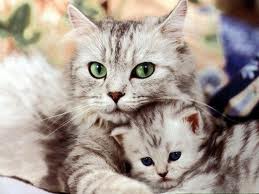 |
| Infected mother cat |
Cats persistently infected with FeLV serve as sources of infection. Virus is shed in very high quantities in saliva and nasal secretions, but also in urine, feces, and milk from infected cats. Cat-to-cat transfer of virus may occur from a bite wound, during mutual grooming, and (though rarely) through the shared use of litter boxes and feeding dishes. Transmission can also take place from an infected mother cat to her kittens, either before they are born or while they are nursing.
Clinical Signs
During the early stages of infection, it is common for cats to exhibit no signs of disease at all. However, over time—weeks, months, or even years—the cat's health may progressively deteriorate or be characterized by recurrent illness interspersed with periods of relative health. Signs can include:
During the early stages of infection, it is common for cats to exhibit no signs of disease at all. However, over time—weeks, months, or even years—the cat's health may progressively deteriorate or be characterized by recurrent illness interspersed with periods of relative health. Signs can include:
· Loss of appetite
· Slow but progressive weight loss, followed by severe wasting late in the disease process
· Poor coat condition
· Enlarged lymph nodes
· Persistent fever
· Pale gums and other mucus membranes
· Inflammation of the gums (gingivitis) and mouth (stomatitis)
· Infections of the skin, urinary bladder, and upper respiratory tract
· Persistent diarrhea
· Seizures, behavior changes, and other neurological disorders
· A variety of eye conditions
· In unspayed female cats, abortion of kittens or other reproductive failures
Prevention
The only sure way to protect cats is to prevent their exposure to FeLV-infected cats. You can do this by:
The only sure way to protect cats is to prevent their exposure to FeLV-infected cats. You can do this by:
· Keep cats indoors, away from potentially infected cats that might bite them. If you do allow your cats outdoor access, provide supervision or place them in a secure enclosure to prevent wandering and fighting.
· Adopt only infection-free cats into households with uninfected cats.
· House infection-free cats separately from infected cats, and don't allow infected cats to share food and water bowls or litter boxes with uninfected cats.
· Consider FeLV vaccination of uninfected cats. (FeLV vaccination of infected cats is not beneficial.) Discuss the advantages and disadvantages of vaccination with your veterinarian. FeLV vaccines are widely available, but since not all vaccinated cats will be protected, preventing exposure remains important even for vaccinated pets.
Feline Infectious Peritonitis
Feline infectious peritonitis (FIP) is a viral disease of cats caused by certain strains of a virus called the feline coronavirus. Cats infected with a feline coronavirus generally do not show any symptoms during the initial viral infection, and an immune response occurs with the development of antiviral antibodies. In a small percent of infected cats (5 to 10 percent), either by a mutation of the virus or by an aberration of the immune response, the infection progresses into clinical FIP. The virus is then referred to as feline infectious peritonitis virus (FIPV). With the assistance of the antibodies that are supposed to protect the cat, white blood cells are infected with virus, and these cells then transport the virus throughout the cat's body.
The Risk
Any cat that carries any coronavirus is potentially at risk for developing FIP. However, cats with weak immune systems are most likely to develop the disease, including kittens, cats already infected with feline leukemia virus (FeLV), and geriatric cats. Most cats that develop FIP are under two years of age, but cats of any age may develop the disease.
FIP is relatively uncommon in the general cat population. However, the disease rate is much higher in multiple-cat populations, such as some shelters and catteries.
Clinical Signs
Clinical Signs
Cats that have been initially exposed to the feline coronavirus usually show no obvious symptoms. Some cats may show mild upper respiratory symptoms such as sneezing, watery eyes, and nasal discharge. Other cats may experience a mild intestinal disease and show symptoms such as diarrhea. Only a small percentage of cats that are exposed to the feline coronavirus develop FIP-and this can occur weeks, months, or even years after initial exposure.
 |
| Cat with FIP |
There are two major forms of FIP, an effusive, or "wet" form, and a noneffusive, or "dry" form. Generally, cats will exhibit the signs of the noneffusive form FIP more slowly than the effusive form. Symptoms generally include chronic weight loss, depression, anemia, and a persistent fever that does not respond to antibiotic therapy.
Feline Immunodeficiency Virus
Virologists classify feline immunodeficiency virus (FIV) as a lentivirus (or "slow virus"). FIV is in the same retrovirus family as feline leukemia virus (FeLV), but the viruses differ in many ways including their shape.
The Infection
FIV-infected cats are found worldwide, but the prevalence of infection varies greatly. In the United States, approximately 1.5 to 3 percent of healthy cats are infected with FIV. Rates rise significantly-15 percent or more-in cats that are sick or at high risk of infection. Because biting is the most efficient means of viral transmission, free-roaming, aggressive male cats are the most frequently infected.
Clinical Signs
Cat infected with FIV can have:
· Poor coat condition and persistent fever with a loss of appetite are commonly seen.
Cat infected with FIV can have:
· Poor coat condition and persistent fever with a loss of appetite are commonly seen.
· Inflammation of the gums (gingivitis) and mouth (stomatitis) and chronic or recurrent infections of the skin, urinary bladder, and upper respiratory tract are often present.
 |
| Cat with FIV |
· Slow but progressive weight loss is common, followed by severe wasting late in the disease process.
· Various kinds of cancer and blood diseases are much more common in cats infected with FIV, too.
· In unspayed female cats, abortion of kittens or other reproductive failures have been noted.
· Some infected cats experience seizures, behavior changes, and other neurological disorders.
Prevention: the test and FIV vaccine
When to test:
· If your cat has never been tested.
· If your cat is sick, even if it tested free of infection in the past but subsequent exposure can't be ruled out.
· When cats are newly adopted, whether or not they will be entering a household with other cats.
· If your cat has recently been exposed to an infected cat.
· If your cat is exposed to cats that may be infected (for example, if your cat goes outdoors unsupervised or lives with other cats that might be infected). Your veterinarian may suggest testing periodically (yearly) as long as your cat is exposed
to potentially infected cats.
to potentially infected cats.
· If you're considering vaccinating with an FIV vaccine.
It is my opinion that cats that live in multi-cat households and cats that go outside, even occasionally, should be tested and vaccinated for the Feline Immunosuppressive Disease group. Even if the vaccines are not 100% protective, as many argue, proactive testing and vaccinating is better that no protection at all.
Cats that live alone and never go out still have a small risk. The risk is not zero. It comes down to personal choice for you and your cat(s).
Some information in this article was obtained through Cornell Feline Health Center, Cornell University, College of Veterinary Medicine, Ithaca, New York.
The Providence Veterinary Hospital Blog is a publication of Peter Herman, VMD, at the Providence Veterinary Hospital, 2400 Providence Ave. in Chester, PA. Contact Dr. Herman at 610-872-4000 or visit us at http://www.providencevet.com
It is my opinion that cats that live in multi-cat households and cats that go outside, even occasionally, should be tested and vaccinated for the Feline Immunosuppressive Disease group. Even if the vaccines are not 100% protective, as many argue, proactive testing and vaccinating is better that no protection at all.
Cats that live alone and never go out still have a small risk. The risk is not zero. It comes down to personal choice for you and your cat(s).
Some information in this article was obtained through Cornell Feline Health Center, Cornell University, College of Veterinary Medicine, Ithaca, New York.
Wednesday, January 11, 2012
Prescription Diets as Part of Medical Treatment
If your dog or cat gets sick, many times there is a diet that could decease or control the disease problem. There is not a diet for every disease, but with present day veterinary medicine, there are quite a few that help.
Kidney Disease
Compliance and Its Importance
 |
| Pet With Early Kidney Failure |
About 85 years ago, there was a veterinarian in New Jersey that commercialized the first diet specific for an ailment in a dog. His name was Dr. Mark Morris and he formulated a pet diet for kidney failure. Today, that commercial diet is one of many produced by Hill’s Prescription Diets. Additionally, there are multiple companies producing diets specific to cat and dog ailments. Some examples of other companies that focus on prescription diets are: Eukanuba, Purina, and Royal Canin. There are others. I am familiar with these companies and prescribe their products. These same companies have a commercial line of products that do not require a prescription and can be found in pet shops and supermarkets. Although they are good quality foods, they are not the same as the prescription diet.
You can now find a range of dog and cat foods that have been created as nutritional aids in the treatment and dietary management of dogs and cats with specific health problems. Today vet-prescribed dietetic foods - often known as therapeutic diets – or prescription diets play a major role in modern veterinary practice, supporting the treatment of many canine and feline diseases, either as the sole therapy or as part of the total treatment.
The science behind these formulations is often ground-breaking, each providing a proper balance of total nutrients while satisfying special dietary needs. Such foods can support or replace drugs and dramatically increase a dog or cat’s chances of living a longer and healthier life.
Some of the more commonly prescribed therapeutic diets offer nutritional support for dogs suffering from
· Heart conditions, high blood pressure or fluid retention;
· Diabetes mellitus, constipation and diarrhea;
· Dermatitis and inflammatory skin conditions;
· Gastrointestinal conditions such as enteritis gastritis pancreatitis and inflammatory bowel disease;
· Severe food allergies or intolerance;
· Inflammatory joint conditions, or arthritis (or for healthy dogs predisposed to joint disorders);
· Kidney failure or liver disease;
· Clinical obesity;
· Urinary and bladder disorders.
· Feline Urological Syndrome
· Hyperthyroid disease in cats
I have chosen two examples of disorders as representative samples of special diets.
 |
| Measuring Vital Signs |
Older dogs may suffer from a gradual loss of kidney function. The kidneys normally act as selective filters, maintaining the body's electrolyte balance and eliminating important waste products such as urea, an end product of protein metabolism. The kidneys also help regulate calcium and phosphorus balance.
Early symptoms of kidney disease include increased thirst and urination, weight loss and pale gums, due to anemia. When kidney function is reduced, waste products begin to build up in the bloodstream, making the animal feel ill. Mild cases, however, often produce no symptoms. They may only be discovered with a routine blood test.
 |
| Hill's RX Diet for Kidney Disease |
Feeding a special diet can slow the progression of kidney disease in many dogs. Sodium restriction lessens the risk of high blood pressure, a common consequence of kidney disease. Also, dogs in kidney failure tend to develop increased serum phosphate, so phosphorus restriction is necessary.
The work load on the kidneys is reduced through dietary management by providing the dog with just enough high-quality protein (complete protein, such as egg or cottage cheese, is often used) to meet its needs, but no more. The end result is less stress on the kidneys, a lower level of urea in the blood-stream, and a dog that feels better.
Intestinal Problems
Intestinal Problems
Therapeutic diets are commonly used for dogs that experience vomiting or diarrhea. Consisting primarily of boiled meat and rice, these bland diets are nonirritating and easily absorbed by the intestinal system.
 |
| Royal Canin Diet for Intestinal Disorders |
Following a gastrointestinal upset, most dogs are initially held off food for 24 to 48 hours, giving the GI system a chance to rest. Then they are offered the special diet, in small amounts, for several days, before the dog's original diet is slowly reintroduced.
Other intestinal disorders require lifelong administration of a therapeutic diet. Dogs with some types of colitis, for example, suffer from periodic bouts of illness, and are commonly maintained on this low-fat, easily absorbed yet nutritional diet.
Compliance and Its Importance
If you take your pet into your veterinarian because he or she is not feeling well, and your pet’s doctor makes a definitive diagnosis, he or she may prescribe a special diet. The diet make be accompanied by medicine or may stand alone.
Either way, the diet prescribed was researched for the disease by qualified scientists in the field and in most cases, many millions of dollars invested in the research. Why on earth would you alter this formula?
Here is an example. “Sam” is a 6 year old male cat with little crystals that block him from urinating. The medical term is called Feline Urological Syndrome. He got put on a special diet to control the production of the crystals. One year later, he is back in the hospital with a blockage. The owner’s comment was, “Doc, this food was really expensive so I bought an over the counter food just like the one you sold me.” In fact, there are foods over the counter that market themselves as prescription diets. In most cases, they are not the same or even close.
The Providence Veterinary Hospital Blog is a publication of Peter Herman, VMD, at the Providence Veterinary Hospital, 2400 Providence Ave. in Chester, PA. Contact Dr. Herman at 610-872-4000 or visit us at http://www.providencevet.com/.
Subscribe to:
Posts (Atom)