Saturday, February 11, 2012

Feline Immunosuppressive Diseases

There are three viral diseases that infect your cat and have similar outcomes. We call these viruses the Feline Immunosuppressive Disease group. All three viruses can infect your cat by transmitting  the virus from one cat to another cat. All three  viruses can be fatal. All three viral diseases have little hope of cure. Testing your cat and possibly vaccinating your cat is the only hope for prevention.

Although these diseases are often grouped together, they are quite different in viral cause and clinical signs. They often hoodwink the veterinarian because there are no clinical signs early in any of these diseases. They often do not announce themselves for what they are – sneaky killers of cats.
Let’s start with
Feline Leukemia (FeLV)
FeLV or Feline Leukemia Virus is found world-wide. It is caused by  a retrovirus. The prevalence of infection varies greatly depending on their age, health, environment, and lifestyle. In the United States, approximately 2 to 3% of all cats are infected with FeLV. Rates rise significantly—13% or more—in cats that are ill, very young, or otherwise at high risk of infection.
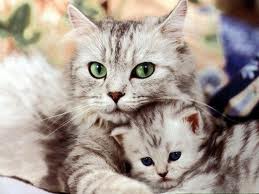
Infected mother cat
Cats persistently infected with FeLV serve as sources of infection. Virus is shed in very high quantities in saliva and nasal secretions, but also in urine, feces, and milk from infected cats. Cat-to-cat transfer of virus may occur from a bite wound, during mutual grooming, and (though rarely) through the shared use of litter boxes and feeding dishes. Transmission can also take place from an infected mother cat to her kittens, either before they are born or while they are nursing.
Clinical Signs

During the early stages of infection, it is common for cats to exhibit no signs of disease at all. However, over time—weeks, months, or even years—the cat's health may progressively deteriorate or be characterized by recurrent illness interspersed with periods of relative health. Signs can include:
·         Loss of appetite
·        Slow but progressive weight loss, followed by severe wasting late in the disease    process
·         Poor coat condition
·         Enlarged lymph nodes
·         Persistent fever
·         Pale gums and other mucus membranes
·         Inflammation of the gums (gingivitis) and mouth (stomatitis)
·         Infections of the skin, urinary bladder, and upper respiratory tract
·         Persistent diarrhea
·         Seizures, behavior changes, and other neurological disorders
·         A variety of eye conditions
·         In unspayed female cats, abortion of kittens or other reproductive failures
Prevention

The only sure way to protect cats is to prevent their exposure to FeLV-infected cats. You can do this by:
·    Keep cats indoors, away from potentially infected cats that might bite them. If you do allow your cats outdoor access, provide supervision or place them in a secure enclosure to prevent wandering and fighting.
·    Adopt only infection-free cats into households with uninfected cats.
·    House infection-free cats separately from infected cats, and don't allow infected cats to share food and water bowls or litter boxes with uninfected cats.
·    Consider FeLV vaccination of uninfected cats. (FeLV vaccination of infected cats is not beneficial.) Discuss the advantages and disadvantages of vaccination with your veterinarian. FeLV vaccines are widely available, but since not all vaccinated cats will be protected, preventing exposure remains important even for vaccinated pets.
Feline Infectious Peritonitis
Feline infectious peritonitis (FIP) is a viral disease of cats caused by certain strains of a virus called the feline coronavirus. Cats infected with a feline coronavirus generally do not show any symptoms during the initial viral infection, and an immune response occurs with the development of antiviral antibodies. In a small percent of infected cats (5 to 10 percent), either by a mutation of the virus or by an aberration of the immune response, the infection progresses into clinical FIP. The virus is then referred to as feline infectious peritonitis virus (FIPV). With the assistance of the antibodies that are supposed to protect the cat, white blood cells are infected with virus, and these cells then transport the virus throughout the cat's body.
The Risk
Any cat that carries any coronavirus is potentially at risk for developing FIP. However, cats with weak immune systems are most likely to develop the disease, including kittens, cats already infected with feline leukemia virus (FeLV), and geriatric cats. Most cats that develop FIP are under two years of age, but cats of any age may develop the disease.
FIP is relatively uncommon in the general cat population. However, the disease rate is much higher in multiple-cat populations, such as some shelters and catteries.

Clinical Signs
Cats that have been initially exposed to the feline coronavirus usually show no obvious symptoms. Some cats may show mild upper respiratory symptoms such as sneezing, watery eyes, and nasal discharge. Other cats may experience a mild intestinal disease and show symptoms such as diarrhea. Only a small percentage of cats that are exposed to the feline coronavirus develop FIP-and this can occur weeks, months, or even years after initial exposure.
Cat with FIP
In cats that develop FIP, the symptoms can appear to be sudden since cats have an amazing ability to mask disease until they are in a crisis state. Once symptoms develop, often there is increasing severity over the course of several weeks, ending in death. Generally, these cats first develop nonspecific symptoms such as loss of appetite, weight loss, depression, rough hair coat, and fever.

There are two major forms of FIP, an effusive, or "wet" form, and a noneffusive, or "dry" form. Generally, cats will exhibit the signs of the noneffusive form FIP more slowly than the effusive form. Symptoms generally include chronic weight loss, depression, anemia, and a persistent fever that does not respond to antibiotic therapy.
Feline Immunodeficiency Virus

Virologists classify feline immunodeficiency virus (FIV) as a lentivirus (or "slow virus"). FIV is in the same retrovirus family as feline leukemia virus (FeLV), but the viruses differ in many ways including their shape.
The Infection
FIV-infected cats are found worldwide, but the prevalence of infection varies greatly. In the United States, approximately 1.5 to 3 percent of healthy cats are infected with FIV. Rates rise significantly-15 percent or more-in cats that are sick or at high risk of infection. Because biting is the most efficient means of viral transmission, free-roaming, aggressive male cats are the most frequently infected.
            Clinical Signs 

            Cat infected with FIV can have:

      ·   Poor coat condition and persistent fever with a loss of appetite are commonly seen.
·    Inflammation of the gums (gingivitis) and mouth (stomatitis) and chronic or recurrent infections of the skin, urinary bladder, and upper respiratory tract are often present.
Cat with FIV
·    Persistent diarrhea can also be a problem, as can a variety of eye conditions.
·    Slow but progressive weight loss is common, followed by severe wasting late in the disease process.
·    Various kinds of cancer and blood diseases are much more common in cats infected with FIV, too.
·    In unspayed female cats, abortion of kittens or other reproductive failures have been noted.
·    Some infected cats experience seizures, behavior changes, and other neurological disorders.
Prevention: the test and FIV vaccine
When to test:
·    If your cat has never been tested.
·    If your cat is sick, even if it tested free of infection in the past but subsequent exposure can't be ruled out.
·    When cats are newly adopted, whether or not they will be entering a household with other cats.
·    If your cat has recently been exposed to an infected cat.
·    If your cat is exposed to cats that may be infected (for example, if your cat goes outdoors unsupervised or lives with other cats that might be infected). Your veterinarian may suggest testing periodically (yearly) as long as your cat is exposed
      to potentially infected cats.
·      If you're considering vaccinating with an FIV vaccine.

      It is my opinion that cats that live in multi-cat households and cats that go outside, even occasionally, should be tested and vaccinated for the Feline Immunosuppressive Disease group. Even if the vaccines are not 100% protective, as many argue, proactive testing and vaccinating is better that no protection at all.

      Cats that live alone and never go out still have a small risk. The risk is not zero. It comes down to personal choice for you and your cat(s).

      Some information in this article was obtained through Cornell Feline Health Center, Cornell University, College of Veterinary Medicine, Ithaca, New York.

     The Providence Veterinary Hospital Blog is a publication of Peter Herman, VMD, at the Providence Veterinary Hospital, 2400 Providence Ave. in Chester, PA. Contact Dr. Herman at 610-872-4000 or visit us at http://www.providencevet.com


Wednesday, January 11, 2012

Prescription Diets as Part of Medical Treatment

If your dog or cat gets sick, many times there is a diet that could decease or control the disease problem. There is not a diet for every disease, but with present day veterinary medicine, there are quite a few that help.

Pet With Early Kidney Failure
About 85 years ago, there was a veterinarian in New Jersey that commercialized the first diet specific for an ailment in a dog. His name was Dr. Mark Morris and he formulated a pet diet for kidney failure. Today, that commercial diet is one of many produced by Hill’s Prescription Diets. Additionally, there are multiple companies producing diets specific to cat and dog ailments. Some examples of other companies that focus on prescription diets are: Eukanuba, Purina, and Royal Canin. There are others. I am familiar with these companies and prescribe their products. These same companies have a commercial line of products that do not require a prescription and can be found in pet shops and supermarkets. Although they are good quality foods, they are not the same as the prescription diet.

You can now find a range of dog and cat foods that have been created as nutritional aids in the treatment and dietary management of dogs and cats with specific health problems. Today vet-prescribed dietetic foods - often known as therapeutic diets – or prescription diets play a major role in modern veterinary practice, supporting the treatment of many canine and feline diseases, either as the sole therapy or as part of the total treatment.

The science behind these formulations is often ground-breaking, each providing a proper balance of total nutrients while satisfying special dietary needs. Such foods can support or replace drugs and dramatically increase a dog or cat’s chances of living a longer and healthier life.
Some of the more commonly prescribed therapeutic diets offer nutritional support for dogs suffering from
·         Heart conditions, high blood pressure or fluid retention;
·         Diabetes mellitus, constipation and diarrhea;
·         Dermatitis and inflammatory skin conditions;
·         Gastrointestinal conditions such as enteritis gastritis pancreatitis and inflammatory bowel disease;
·         Severe food allergies or intolerance;
·         Inflammatory joint conditions, or arthritis (or for healthy dogs predisposed to joint disorders);
·         Kidney failure or liver disease;
·         Clinical obesity;
·         Urinary and bladder disorders.
·         Feline Urological Syndrome

·         Hyperthyroid disease in cats
I have chosen two examples of disorders as representative samples of special diets.
Measuring Vital Signs
Kidney Disease

Older dogs may suffer from a gradual loss of kidney function. The kidneys normally act as selective filters, maintaining the body's electrolyte balance and eliminating important waste products such as urea, an end product of protein metabolism. The kidneys also help regulate calcium and phosphorus balance.

Early symptoms of kidney disease include increased thirst and urination, weight loss and pale gums, due to anemia. When kidney function is reduced, waste products begin to build up in the bloodstream, making the animal feel ill. Mild cases, however, often produce no symptoms. They may only be discovered with a routine blood test. 

Hill's RX Diet for Kidney Disease
Feeding a special diet can slow the progression of kidney disease in many dogs. Sodium restriction lessens the risk of high blood pressure, a common consequence of kidney disease. Also, dogs in kidney failure tend to develop increased serum phosphate, so phosphorus restriction is necessary.

The work load on the kidneys is reduced through dietary management by providing the dog with just enough high-quality protein (complete protein, such as egg or cottage cheese, is often used) to meet its needs, but no more. The end result is less stress on the kidneys, a lower level of urea in the blood-stream, and a dog that feels better.

Intestinal Problems
Therapeutic diets are commonly used for dogs that experience vomiting or diarrhea. Consisting primarily of boiled meat and rice, these bland diets are nonirritating and easily absorbed by the intestinal system. 
Royal Canin Diet for Intestinal Disorders
Following a gastrointestinal upset, most dogs are initially held off food for 24 to 48 hours, giving the GI system a chance to rest. Then they are offered the special diet, in small amounts, for several days, before the dog's original diet is slowly reintroduced. 

Other intestinal disorders require lifelong administration of a therapeutic diet. Dogs with some types of colitis, for example, suffer from periodic bouts of illness, and are commonly maintained on this low-fat, easily absorbed yet nutritional diet.


Compliance and Its Importance
If you take your pet into your veterinarian because he or she is not feeling well, and your pet’s doctor makes a definitive diagnosis, he or she may prescribe a special diet. The diet make be accompanied by medicine or may stand alone.
Either way, the diet prescribed was researched for the disease by qualified scientists in the field and in most cases, many millions of dollars invested in the research. Why on earth would you alter this formula?  

Here is an example. “Sam” is a 6 year old male cat with little crystals that block him from urinating. The medical term is called Feline Urological Syndrome. He got put on a special diet to control the production of the crystals. One year later, he is back in the hospital with a blockage. The owner’s comment was, “Doc, this food was really expensive so I bought an over the counter food just like the one you sold me.” In fact, there are foods over the counter that market themselves as prescription diets. In most cases, they are not the same or even close. 

The Providence Veterinary Hospital Blog is a publication of Peter Herman, VMD, at the Providence Veterinary Hospital, 2400 Providence Ave. in Chester, PA. Contact Dr. Herman at 610-872-4000 or visit us at http://www.providencevet.com/.


Saturday, December 3, 2011

Winterizing Your Pet and Holiday Safety Ideas

I started out writing about the Holidays and pet safety. I decided to include cold weather, winter and general safety ideas for the holiday seasons coming up: Thanksgiving, Hanukkah, Christmas, Kwanzaa and any other holiday season that occurs in the cold Northeast region of the USA during this time of year.
Before you do anything to protect your pet, take your pet for a winter check-up before winter kicks in. Your veterinarian can check to make sure they don’t have any medical problems that will make them more vulnerable to the cold.
Winter
Cold weather can be hard on pets, just like it can be hard on people. Sometimes owners forget that their pets are just as accustomed to the warm shelter of the indoors as they are. Some owners will leave their animals outside for extended periods of time, thinking that all animals are adapted to live outdoors. This can put their pets in danger of serious illness.
Keep your pets inside as much as you can when the mercury drops. If you have to take them out, stay outside with them. When you’re cold enough to go inside, they probably are too. If you absolutely must leave them outside for a significant length of time, make sure they have a warm, solid shelter against the wind, thick bedding (hay is a great insulator that they can snuggle down in), and plenty of non-frozen water.


Cats will curl up against almost anything to stay warm--including car engines. Cats caught in moving engine parts can be seriously hurt or killed. Before you turn your engine on, check beneath the car or make a lot of noise by honking the horn or rapping on the hood.
If you light a fire or plug in a space heater to keep your home toasty warm, remember that the heat will be as attractive to your pets as to you. As your dog or cat snuggles up to the warmth, keep an eye out to make sure that no tails or paws come in contact with flames, heating coils, or hot surfaces. Pets can either burn themselves or knock a heat source over and put the entire household in danger.
Pets that go outside can pick up rock salt, ice, and chemical ice melts in their foot pads. To keep your pet’s pads from getting chapped and raw, wipe the feet with a washcloth when your pet comes inside.
Never let your dog off the leash on snow or ice, especially during a snowstorm, dogs can lose their scent and easily become lost. More dogs are lost during the winter than during any other season, so make sure yours always wears ID tags.   
Like coolant, antifreeze is a lethal poison for dogs and cats. Be sure to thoroughly clean up any spills from your vehicle, and consider using products that contain propylene glycol rather than ethylene glycol.
Holidays
Hanukkah and Christmas can be happy events but the holidays can be disastrous and even downright deadly for pets. Seasonal decorations, ornamental lighting, ingestion of inappropriate or toxic items, excessive consumption of rich foods or harmful food, candle flames, candles and many other hazards can happen at this time of year.  
Remember that plants (holly, mistletoe, poinsettia, lilies, Christmas rose, etc,) are poisonous to pets.   
 Unsecured Christmas trees pose hazards to climbing critters as they can topple or be knocked over.
Don't forget to prevent the ingestion of Christmas tree water since stagnant water or preservatives can be toxic.
Mistletoe, holly berries and poinsettia plants can be poisonous to pets, causing severe upset stomachs. Pine needles can irritate a pet's intestine and cause an emergency visit to the vet. Consider using repellent sprays or a doggie gate to help keep pets away from areas and objects that may be harmful.
Other holiday hazards include menorahs, candles and liquid potpourri pots.
Electrical cords, heated decorative bulbs, hooks, and a wide variety of other adornment items create temptations.  
Keep trash lids on tight. Chewed aluminum foil and e-coili are risks to pets.
Store food in secure containers out of reach to prevent ingestion or poisoning.
Rich foods and inappropriate feeding can create health complications for household critters. Dangerous food items include holiday favorites such as chocolate, coffee, onions, fatty foods, alcoholic beverages, and cooked or raw bones.
During holiday parties, pets may not understand why their usually quiet home is filled with people and noise. Provide pets with a quiet place to retreat. This way, they can choose whether to come out and visit or keep to themselves.
With a little forward thinking, before the excitement of holiday times begin, think your way through the types of hazards your pet might decide to get involved with. This is not a complete list of do's and don't, but hopefully it will stimulate your thinking enough and possibly prevent a catastrophic event during the holidays.


Seasons Greetings!


The Providence Veterinary Hospital Blog is a publication of Peter Herman, VMD, at the Providence Veterinary Hospital, 2400 Providence Ave. in Chester, PA. Contact Dr. Herman at 610-872-4000 or visit us at http://www.providencevet.com/.

Saturday, October 29, 2011

Dogs and Cats that Eat Things They Should Not


Dog ate my homework and other things
Dogs and cats, like children, are curious animals and love to play. However, they also like to chew on their toys and stuff and, as a result, sometimes swallow harmful objects that can affect their digestion and life. It is important that you protect your dog or cat from ingesting dangerous foreign bodies.

A gastrointestinal foreign body refers to any material other than food that is eaten and that results in serious digestive problems. Foreign bodies can become lodged in the stomach and intestines creating an obstruction. Commonly ingested non-food items include toys, string, clothing, and plastic. In fact, any household object your dog or cat chews on can become a foreign body problem.

Dogs of any age are susceptible to developing foreign body problems but this is most commonly seen in young dogs or cats less than 2 years of age. These youngsters are naturally curious and enjoy playing. Popular chew toys for dogs are socks, shoes, pantyhose and underwear. Cats prefer shoelaces, strings, yarn and needles. Frequently, while playing and chewing on these items, the dog or cat may unintentionally ingest some or all of the material. Although some smaller foreign bodies can pass through the gut without getting stuck and causing a problem, the larger pieces can result in serious gastrointestinal complications.

My pediatrician used to say that nickles and dimes are not worth calling about. But call him if my child swallows a quarter or half dollar.

What to Watch For

Dogs that have ingested a foreign object usually show signs of gastrointestinal upset. If your dog refuses to eat, begins vomiting, drooling or has abnormal bowel movements, contact your veterinarian. In some instances, you may notice a foreign object, such as a string, protruding from the rectum of your dog or cat. Do not try to pull the object out - consult your vet.

Diagnosis

Your veterinarian will begin by obtaining a complete and thorough medical history, including recent chewing on foreign material. A physical examination will follow. If a foreign body is suspected, abdominal radiographs (x-rays) will be recommended. Most foreign objects can be confirmed on plain x-rays but a few elusive ones may require a dye material like barium in order for diagnosis.
Since removal of most foreign bodies requires surgery, once a gastrointestinal foreign body is diagnosed, your veterinarian may order blood tests to assess the general health of your dog.

Actual Case at Providence Veterinary Hospital 

Scampy, a 23 month old Cavalier King Charles Spaniel, stopped eating and was swallowing with effort as if he had heartburn. Radiographs were taken and the stomach appeared to be full. Scampy hadn’t eaten much so what was in the stomach?

After a barium series, it was determined that something indeed was in the stomach and probable not going anywhere. We monitored Scampi for a few days to see if whatever was there would pass. It did not.

It was decided that surgery should be done to remove whatever we saw on radiographs.
Sock taken out of Scampy's stomach
After an incision in the abdomen and then one in the stomach, a sock was removed from Scampy’s stomach. Here is the picture of the sock with a quarter next to it to see the relative size of the sock ingested.
Once Scampy was able to eat and drink without vomiting, he was sent home.
Preventative Care
The best way to prevent your dog from ingesting foreign bodies is to prevent access to objects that could be swallowed. Keep dangerous objects away from your dog and allow him to chew only on toys that cannot be swallowed. Never let him play with string or clothing.

If you suspect that your dog may have ingested something that may not pass through his intestinal tract, contact your veterinarian. Waiting until your pet starts to vomit will make removal of the foreign material more difficult, dangerous and costly.


The Providence Veterinary Hospital Blog is a publication of Peter Herman, VMD, at the Providence Veterinary Hospital, 2400 Providence Ave. in Chester, PA. Contact Dr. Herman at 610-872-4000 or visit us at http://www.providencevet.com/.

Wednesday, September 7, 2011

What You Need To Know About Canine Arthritis

Canine arthritis involves the inflammation in a joint or joints. This can result in changes to the joint cartilage, the joint fluid, the bones involved in the joint and the actual capsule of the joint depending on the cause of the inflammation.

There are many causes that create arthritis. Listed below are the main types:

Osteoarthritis - trauma, wear and tear

Immune-mediated - Rheumatiod

Genetic - malformed hips, elbows or knees

Infective - Lyme or Anaplasma

Idiopathic (where the cause is unknown)

Arthritis Symptoms

Osteoarthritis or degenrative joint disease is a painful condition and can make your dog's life miserable, therefore the sooner you detect the signs of dog arthritis, the faster you can adopt measures to slow its progression and help save your dog from further pain. Here is a rundown on some of the symptoms that your dog may have athritis:
<> 
<>

  • Stiffness, lameness, or limping after rest
  • Loss of appetite or unusual weight gain
  • Inactivity and sleeping a lot more
  • Relutance to walk, run or climb stairs
  • Unusual urinating in the house
  • Irritability and behavioural changes
  • Depressed or withdrawn
If your dog has any of these symptoms, take it to a veterinarian for a full diagnosis. Typical dog arthritis evaluation will involve some physical examinations, blood tests and X-rays. In some cases, a synovial (joint) fluid analysis may be performed if joint swelling is noticed.

Treatment of Canine Arthritis

Once you confirm that your dog has joint pain due to arthritis, you will need to know what you can do to help relieve the pain and minimize your pet's arthritic discomfort.

There are many ways to keep your dog's arthritis condition under control and to substantially improve the quality of your dog's life. Some treatment options available for canine arthritis include:

Physical Therapy

Light to moderate exercise is encouraged because it helps maintain your dog's muscle mass and perserves joint flexibilty. Swimming is an exccellent exercise that improves muscle mass without overstressing the joints. Overweight dogs should be encouraged to lose weight to delay the onset degenerative arthritis.

Medication

There are always conventional medications to treat arthritis and help relieve dog joint pain. The use of Nonsteroidal anti-inflammatory drugs (NSAIDS) and their anti-inflammatory properties can help provide rapid relief for your dog's arthritis pain, but they do not repair or heal cartilage.

Caution: Never give your dog any human form of medication such as common household aspirin. If you are going to give your dog aspirin or steriods for arthritis pain, make sure you understand the possible side effects that may affect your dog.

Surgery

Surgery is usually recommended as a last resort treatment for dogs with canine arthritis because the treatment is expensive and it may also cause even further pro-longed pain for your dog. Your veterinarian will only suggest surgery when all other possible non-surgical treatments are exhausted to relieve your dog’s pain. The types of surgery available include joint repair, fusion, hip replacement and arthroscopic surgery.

Alternative Supplements for Arthritis Pain Relief and Joint Health

Supplements containing glucosamine and chondroitin can be very helpful for dogs primarily where the joints are involved. Glucosamine is naturally present in animal bones and as a dietary supplement, it can help to promote new cartilage growth, relieve joints and muscle pain and improve joint mobility.

Acupuncture can give excellent results in pain management and may eliminate the requirement for medications.

Herbal medicine can give great benefits also as they are designed to treat the animal in a holistic manner. Be confident in your choice of herbal practitioner and ask your veterinarian for guidance if unsure.

Future Prevention

If your dog is diagnosed with canine arthritis, work with your vet to establish a holistic treatment plan to help your dog live each day as pain free as possible.

Good healthy diets and proper exercise help your dog either avoid canine arthritis or reduce its affects.

A good healthy diet that prevents your dog from gaining too much weight is ideal. Diet is even more important when your dog is a puppy. Puppies need well-balanced, wholesome diets, with added calcium, to help minimize the likelihood of joint displacement. Adding omega 3 oil to the diet will also help to balance out its diet and add valuable vitamins and minerals it needs every day.

Contrary to what many people think, exercise is vital for dogs with arthritis. It should start out as gentle exercise to get your dog’s joints moving and progressively increase it as your dog’s fitness levels rise. Try gently massaging your dog’s painful joints to help restore the blood flow.
A dog with arthritic conditions can live normal, healthy lives and are better off out playing with a ball to keep their joints and muscles moving. A dog that gets little exercise puts on weight, and its joints and muscles seize up.

Buy a good orthopedic bed made for dogs with arthritis. Just like us, a dog’s painful joints may become inflame in cold weather so a good bed will keep your dog warm, support its weary bones and help your furry friend get a good night’s sleep.

Remember as a dog owner, there is much you can do to make a huge difference in the quality of your dog’s life to help your dog lead a pain free life especially if he/or she is suffering from joint problems like dog arthritis.

The Providence Veterinary Hospital Blog is a publication of Peter Herman, VMD, at the Providence Veterinary Hospital, 2400 Providence Ave. in Chester, PA. Contact Dr. Herman at 610-872-4000 or visit us at http://www.providencevet.com/.